

Uganda
RoRo to Mombasa, then by road to Kampala and other Ugandan cities. Our Kampala office supports consignees on arrival.
Choisissez votre langue · اختر لغتك · Escolha o idioma · Elija su idioma

Regular roll-on/roll-off sailings from Dubai to 25 African ports, from Mombasa, Dar es Salaam and Durban to Luanda, Lagos, Tema, Abidjan and Dakar, for cars, SUVs, trucks, buses and wheeled machinery, booked and loaded by a team with 40+ years of experience.
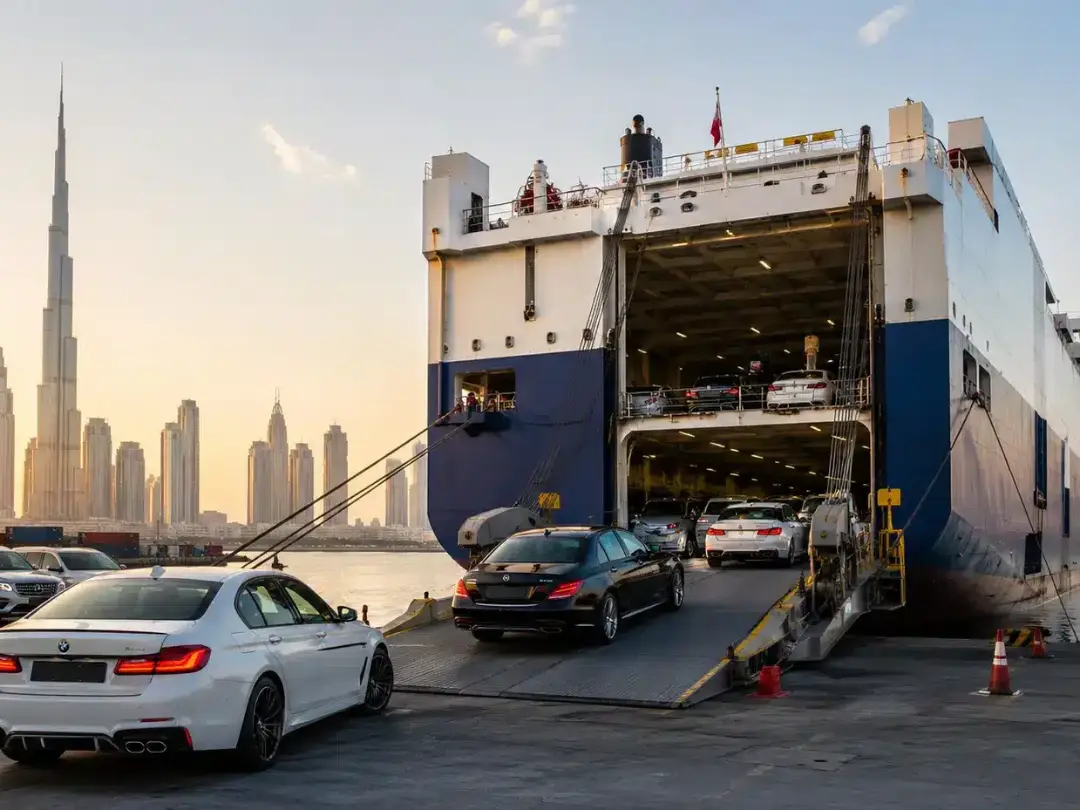
Roll-on/roll-off is the simplest way to move anything with wheels across the ocean. We book the sailing, prepare the unit and handle export formalities in Dubai, whatever you are shipping.
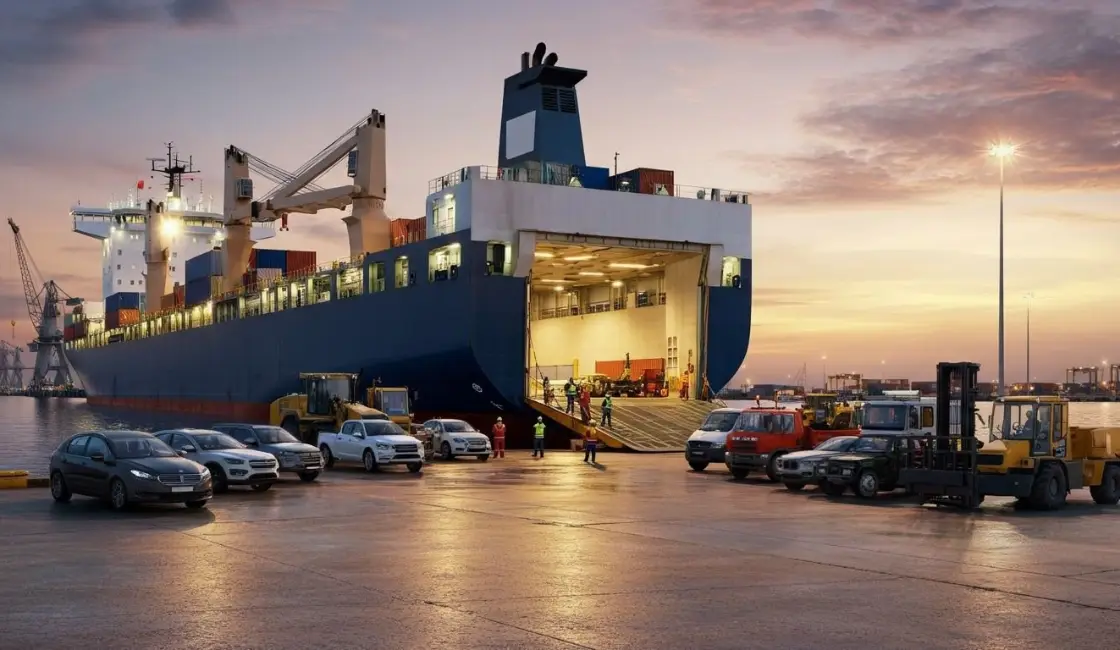
01 · CarsSedans, hatchbacks, SUVs and 4x4s are driven aboard a car carrier in Dubai and driven off at the African port.
Typical units: Cars, SUVs, pickups & vans
How RoRo works
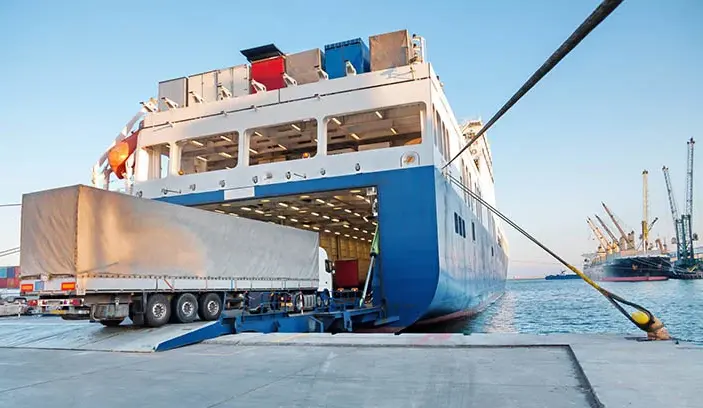
02 · CommercialTippers, tractor heads, buses and coaches travel on the vessel’s heavy-vehicle decks, with height and weight declared at booking.
Typical units: Trucks, buses, tankers & trailers
See what can go by RoRo
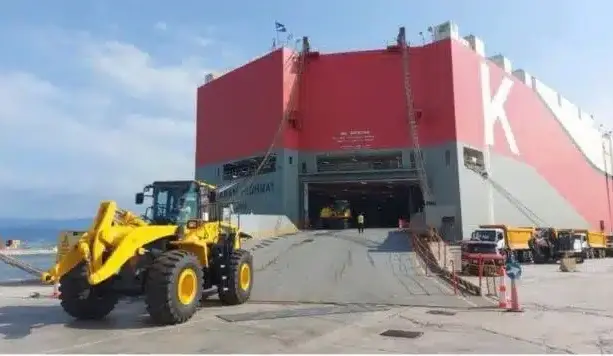
03 · MachineryWheeled machines drive aboard; tracked or static units are loaded on roll trailers, so cranes are rarely needed.
Typical units: Excavators, loaders, graders & cranes
Explore machinery RoRo
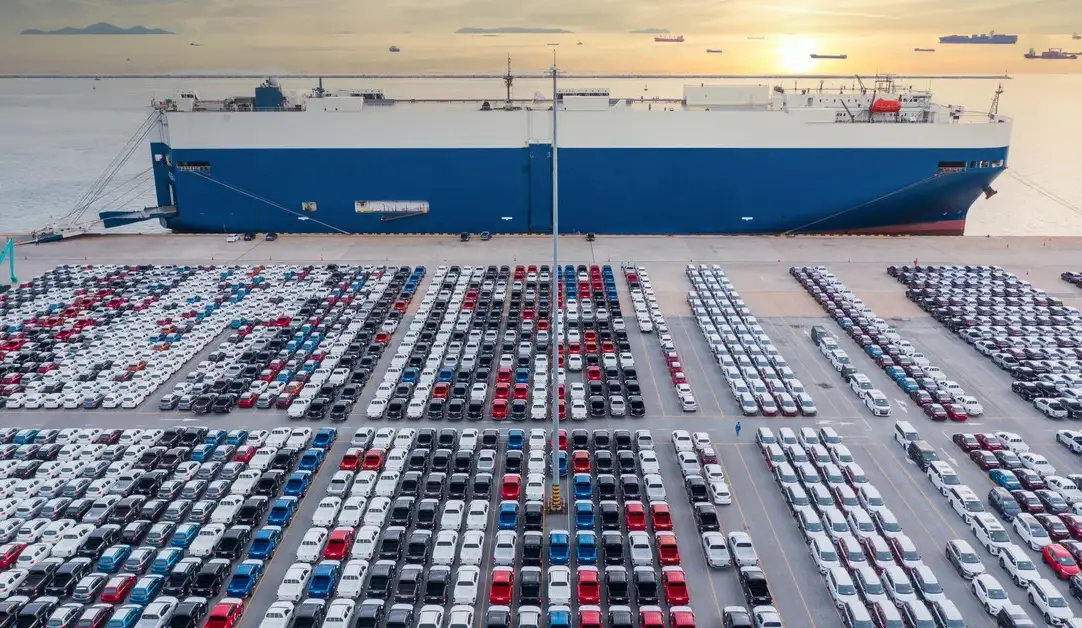
04 · FleetsMultiple units booked on the same sailing, with collection, storage at our Dubai yard and loading coordinated in one plan.
Typical units: Dealer stock, project fleets & NGO vehicles
Ask about fleet rates
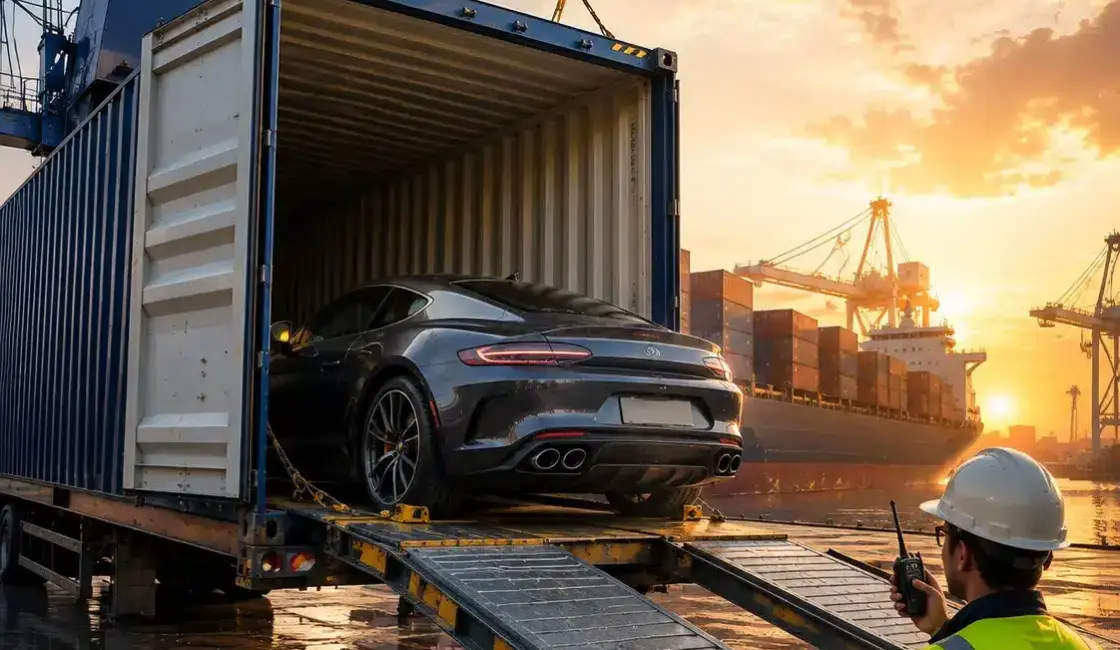
05 · AlternativesNon-running, luxury or oversized units can travel in a container or on a flat rack instead. We advise on the best option for each shipment.
Typical units: Non-runners, luxury cars & out-of-gauge units
Compare methods
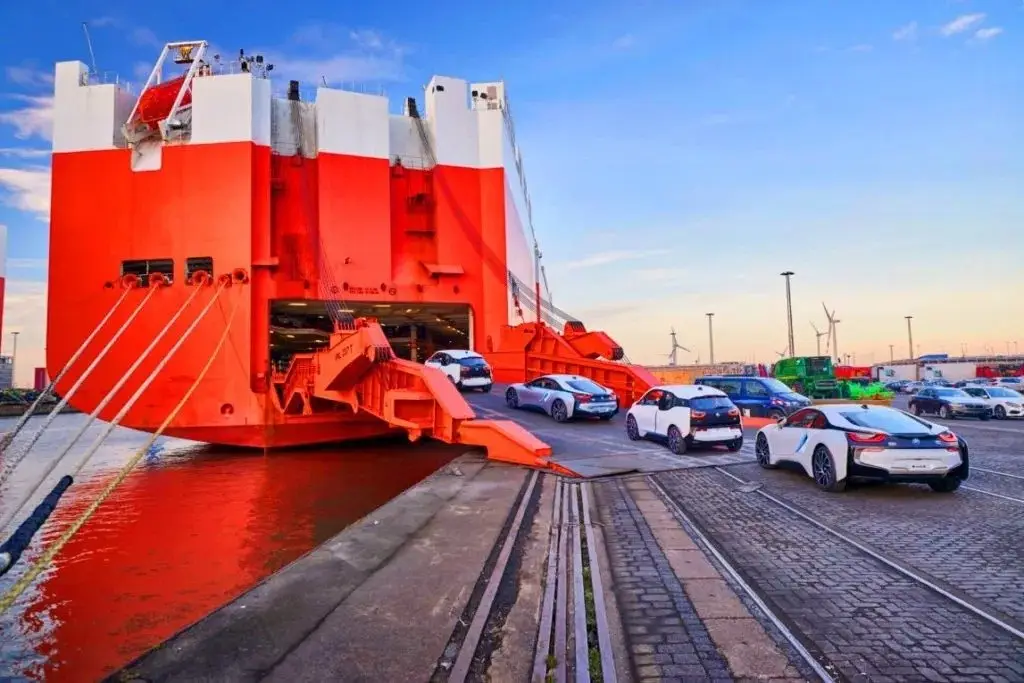
RoRo stands for roll-on/roll-off. Instead of being lifted by crane or packed into a container, your vehicle is driven up the stern ramp of a purpose-built car carrier, parked on one of its vehicle decks and secured with lashings. At the African port it is simply driven off again.
Because there is no container to pay for and very little handling, RoRo is usually the most economical way to ship running vehicles from Dubai to Africa. It also suits units that are too big for a container, such as buses, trucks and wheeled machinery.
RoRo sailings run to fixed schedules, so good planning is what gets your vehicle on the right vessel. This is how we handle each RoRo shipment to Africa.
Tell us the vehicle and the African destination. We match it to the RoRo line and sailing that serve that port and confirm the cut-off date for delivery.
RoRo is charged by the vehicle’s size, so we confirm length, width, height and weight to give a firm freight rate with port charges explained.
The vehicle should be clean, empty of personal belongings, with a charged battery and a low fuel level. Our checklist covers everything the terminal will inspect.
You deliver to our Ras Al Khor yard or we collect. We complete UAE export clearance and deliver the vehicle to the RoRo terminal before the cut-off.
At the terminal the vehicle is driven aboard, parked and lashed on deck. Once the vessel sails we release the bill of lading.
The vehicle is driven off at the destination port. Your clearing agent collects it using the original bill of lading, or we connect you with ours.
Mega Speed Cargo runs regular RoRo sailings from Dubai to East, Southern, Central, West and North Africa. These are the ports we book vehicles, trucks and machinery to. For landlocked countries, we combine RoRo with onward road transport.
Main gateways for Kenya, Tanzania and the landlocked countries of East and Central Africa, plus Djibouti for Ethiopia.
For South Africa, Mozambique and onward road transit to Zambia, Zimbabwe, Malawi and Botswana.
Regular RoRo calls on the Atlantic coast of Central Africa, including Angola and the Congo basin.
From Nigeria to Mauritania, West Africa is covered by a dedicated RoRo route from Dubai.
Djen Djen in Algeria is served by RoRo with transhipment via Jeddah, Yanbu or Aqaba. Casablanca is reached on the West Africa route.
Route 1 covers East, Southern and Central Africa. Route 2 covers West Africa. Ask us for the next sailing date and cut-off on your route.
| Destination | Port | Method | Approx. transit |
|---|---|---|---|
| Kenya | Mombasa | RoRo | 7–10 days |
| Tanzania | Dar es Salaam | RoRo | 8–12 days |
| Nigeria | Lagos / Tin Can Island | RoRo | 14–18 days |
| Ghana | Tema | RoRo | 16–20 days |
| South Africa | Durban | RoRo | 14–21 days |
Approximate sea transit only. RoRo vessels often call at several ports, so actual transit depends on the rotation, port congestion and weather. We confirm the schedule for your sailing when you book.
Many of our customers are in countries without a seaport. Their vehicles travel by RoRo to the nearest coastal port and continue by road, with our local offices helping on arrival.
RoRo to Mombasa, then by road to Kampala and other Ugandan cities. Our Kampala office supports consignees on arrival.
RoRo to Mombasa or Dar es Salaam, then by road to Kigali or Bujumbura, with our offices in both cities.
RoRo to Dar es Salaam or Durban, then by road to Lusaka and the Copperbelt, supported by our Lusaka office.
RoRo to Dar es Salaam or Mombasa for eastern DRC (Goma, Bukavu), to Dar es Salaam or Durban for Lubumbashi, or via the Atlantic ports for Kinshasa. Our Kinshasa and Lubumbashi offices support consignees.
RoRo to Dar es Salaam or Durban, then by road to Lilongwe or Blantyre.
RoRo to Durban, then by road to Harare, Bulawayo or Gaborone.
RoRo to Mombasa, then by road through Uganda to Juba.
RoRo from Dubai to Djibouti, then by road to Addis Ababa. Ask us about current sailings and import rules for Ethiopia.
From Dubai we also ship to Europe, the Americas and Asia. See our sister site for automobile shipping worldwide.
RoRo vessels carry anything that can be driven or towed up the ramp. Here is how we handle the most common units on African routes, and when we recommend another method instead.
The most common RoRo cargo to Africa. Sedans, hatchbacks, Land Cruisers, Prados and other SUVs are driven aboard and secured on the car deck.
Hilux, Land Cruiser pickups, Hiace vans and minibuses travel on the same decks as cars, with pricing based on their length and height.
Rigid trucks, tippers, water tankers and tractor heads go on the reinforced high and heavy decks. Rates are based on cubic metres and weight.
City buses, school buses and long-distance coaches are driven aboard under their own power. Popular for transport operators in East and West Africa.
Loaders, graders and tractors drive on. Excavators, dozers and other tracked units are loaded on roll trailers (mafi) so they can still travel RoRo.
RoRo needs a vehicle that starts, steers and brakes. Non-runners, accident cars and units without keys are shipped in a container or on a flat rack instead.
For mining, construction and agriculture projects across Africa, RoRo is often the simplest way to move large equipment: no crane lifts at either port and no container size limits.
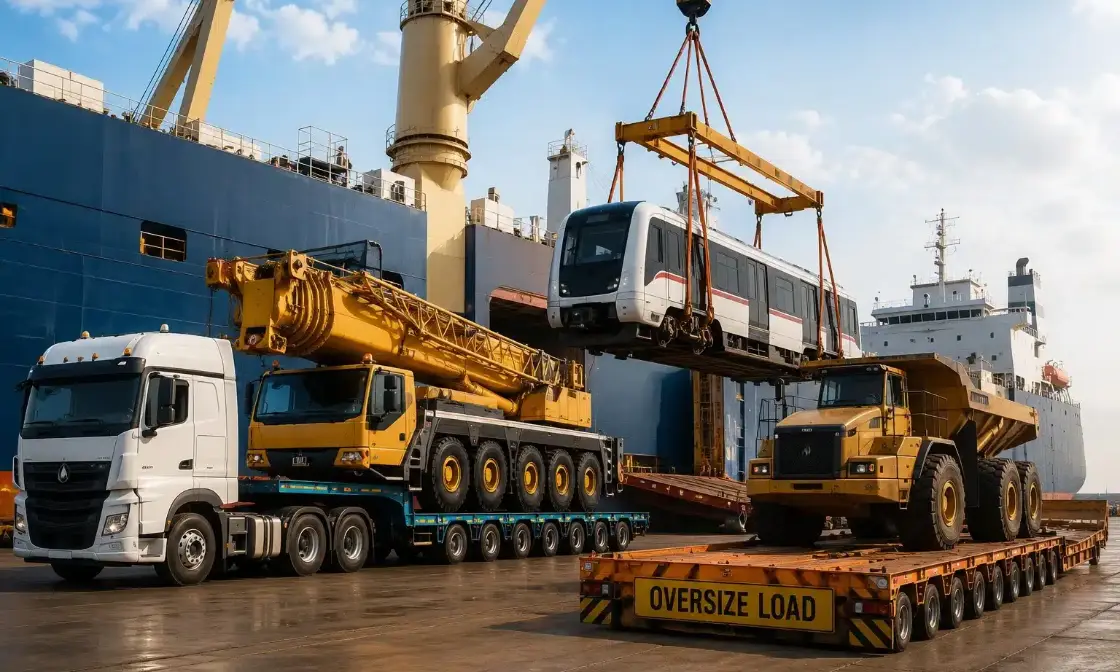
Up to the vessel's deck limits
We take the dimensions, weight and photos of each unit, confirm deck space with the carrier, then arrange transport to the port, lashing and export clearance in Dubai. Units that are too tall or cannot roll go on a flat rack instead.
Most delays on African RoRo routes come from a vehicle that does not meet the import rules or is not ready for loading. Check these points before you buy or book.
Several African countries cap the age of imported vehicles or charge higher duty on older ones. Kenya, for example, applies an age limit on used cars. Check the rule for your country before buying.
Kenya, Tanzania, Uganda and South Africa drive on the left, while Nigeria, Ghana and most of West Africa drive on the right. Some countries restrict the steering side that can be registered.
RoRo stevedores drive the vehicle on and off the ship. It must start, steer and brake. If it cannot, we move it to a container or flat rack.
Carriers generally do not accept personal effects or loose cargo inside RoRo vehicles. Goods left in the cabin can be removed or cause the unit to be rejected.
Some destinations require a pre-shipment inspection or roadworthiness certificate before the vehicle sails. We tell you if one applies and help arrange it in Dubai.
Import duty, VAT and local port charges are paid by the consignee at the African port. Ask a local clearing agent for an estimate before you ship.
| Method | How it ships | Speed | Best for |
|---|---|---|---|
| RoRo | Driven on and off the vessel | Scheduled RoRo sailings | Running cars, pickups, trucks, buses and wheeled machinery |
| Shared container | Several cars in one 40ft container | Weekly container services | Single cars needing enclosed protection at a lower cost |
| Dedicated container | Your own 20ft or 40ft container | Weekly container services | Luxury cars, non-runners and cars with spare parts |
| Flat rack | Open container lifted by crane | Container services | Over-height machinery and units that cannot roll |
| Air freight | Loaded on a cargo aircraft | Days, not weeks | Urgent, high-value or exotic vehicles |
The voyage ends at discharge, but the shipment is only finished when the vehicle leaves the port. Here is what to prepare at the destination side.
We send the bill of lading and shipping documents before the vessel arrives, so the consignee or clearing agent can lodge the customs entry early.
A licensed clearing agent at the port handles the customs declaration, duty assessment and port release on behalf of the consignee.
Import duty, VAT, port handling and storage are paid locally. Collecting quickly after discharge keeps storage charges down.
Drive away from the port or arrange transit trucking to inland countries. Our offices in East and Central Africa can help with onward movement.
Need a contact for clearance at Mombasa, Dar es Salaam or another port? Ask our team on WhatsApp.
Decades of shipping vehicles and machinery from Dubai to African ports.
Uganda, Rwanda, Burundi, DR Congo, Zambia and Angola, close to your consignee.
Including our own vehicle loading and storage yard in Ras Al Khor.
One person to call from collection in Dubai to discharge in Africa.
We are not tied to one method. If a container or flat rack works out better for your vehicle or route, we tell you before you book.
Many of our customers are in Uganda, Rwanda, Zambia and DR Congo. We plan the sea leg and the transit leg together.
Vehicles are received at our yard, inspected, photographed and prepared for RoRo before delivery to the port.
Booking details, documents and sailing updates are shared on WhatsApp, so you always know where your vehicle is.
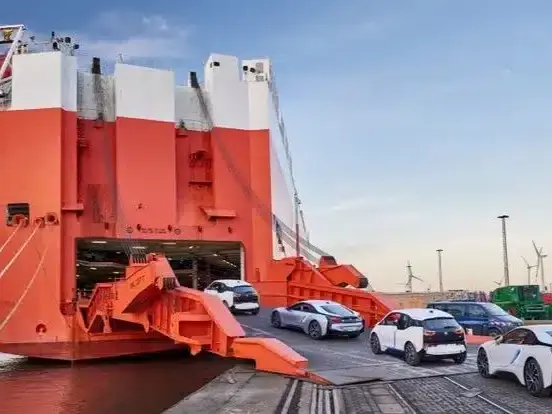
Roll-on/roll-off (RoRo) shipping means vehicles are driven straight onto a purpose-built car carrier, parked on internal decks and driven off at the destination port. From Dubai it is the most widely used way to send running vehicles to East, West and Southern Africa.
There is no container to rent, stuff or lash, and no crane lift at either end. You pay for the space your vehicle takes on deck, which makes RoRo the economical choice for most single cars, trucks and buses.
Cars are often priced per unit. Larger vehicles and machinery are priced by volume (length × width × height in cubic metres) and sometimes by weight. Port charges at both ends, collection in the UAE and any special handling are added on top.
The destination port, the size and weight of the vehicle, the season and space on the next sailing all play a part. Send us the make, model, year and destination, and we will quote the current rate.
RoRo carriers run scheduled services from the UAE to Africa, but they sail less often than container ships. Booking early secures space and lets us deliver your vehicle to the port in time for the cut-off.
For non-running vehicles, cars with personal items inside, or ports without regular RoRo calls, a shared or dedicated container is the better option. We check this for every booking.
Tell us what you are shipping and to which port. Our RoRo desk will reply on WhatsApp with the rate and the next available sailing.
RoRo (roll-on/roll-off) shipping is a method where vehicles are driven onto a specialised vessel, secured on its internal decks and driven off at the destination port. It is used for cars, trucks, buses and wheeled or trailer-mounted machinery.
We ship RoRo from Dubai to 25 African ports. East and Southern Africa: Mombasa, Dar es Salaam, Zanzibar, Djibouti, Durban and Maputo. Central Africa: Luanda, Pointe-Noire, Libreville, Bata and Douala. West Africa: Lagos (Tin Can), Cotonou, Lomé, Tema, Takoradi, Abidjan, Conakry, Freetown, Monrovia, Banjul, Dakar and Nouakchott. North Africa: Djen Djen (Algeria) and Casablanca (Morocco).
Yes. We run two regular RoRo routes from Dubai: Route 1 to East, Southern and Central Africa, and Route 2 to West Africa, calling at ports such as Lagos, Cotonou, Lomé, Tema, Abidjan, Conakry, Freetown and Dakar. Each sailing has a cut-off date for vehicle delivery, so ask us for the next schedule.
Transit times vary by carrier and route. As a guide, Mombasa takes around 7 to 10 days and Dar es Salaam 8 to 12 days at sea, while West and Southern African ports usually take two to three weeks. Waiting time for the next sailing comes on top.
The rate depends on the destination port, the vehicle size and weight, the sailing and any collection or special handling. Cars are often quoted per unit and larger vehicles by cubic metre. Send us the vehicle details on WhatsApp for a current quote.
For a single running vehicle, RoRo is usually the more economical option because there is no container to rent and no crane lift. A shared container can be competitive when several cars travel together, and it offers enclosed protection.
Generally no. RoRo carriers expect vehicles to be empty apart from standard tools and the spare wheel. If you need to send goods with the car, a container is the right option.
RoRo needs a vehicle that starts, steers and brakes, because it is driven on and off the ship. Non-running or damaged vehicles are shipped in a container or on a flat rack instead.
Yes. Trucks, tippers, buses and wheeled machinery travel on the high and heavy decks. Tracked machinery such as excavators and dozers can be loaded on roll trailers. We need the dimensions, weight and photos to confirm space.
Landlocked countries are served through coastal ports. Vehicles for Uganda and Rwanda usually discharge at Mombasa or Dar es Salaam, Zambia and Malawi through Dar es Salaam or Durban, then continue by road. Our offices in the region support the transit.
Typically the purchase invoice, the UAE export certificate or registration card, a copy of the consignee's ID and the chassis number. Some destinations also need inspection certificates or import permits.
Import duty, VAT and destination port charges are paid by the consignee at arrival, normally through a licensed clearing agent. We share the shipping documents in advance so clearance can start early.
Yes. We collect vehicles from showrooms, auctions and private sellers across the UAE, bring them to our yard in Ras Al Khor and deliver them to the port for loading.
Make sure it runs, the battery is charged, fuel is about a quarter tank or less, alarms are switched off, there are no leaks and the cabin is empty. Hand over the keys with the documents.
Send the vehicle make, model, year and destination on WhatsApp or use the quote form on this page. We confirm the rate and the next sailing, then arrange collection, export clearance and loading.
Fill in the details and continue on WhatsApp.